











d4vd Case: Comprehensive Breakdown of the Murder Charges, Evidence, and Legal Proceedings
D4vd Case: A Comprehensive Breakdown of the Murder Charges, Evidence, and High-Stakes Legal Battle
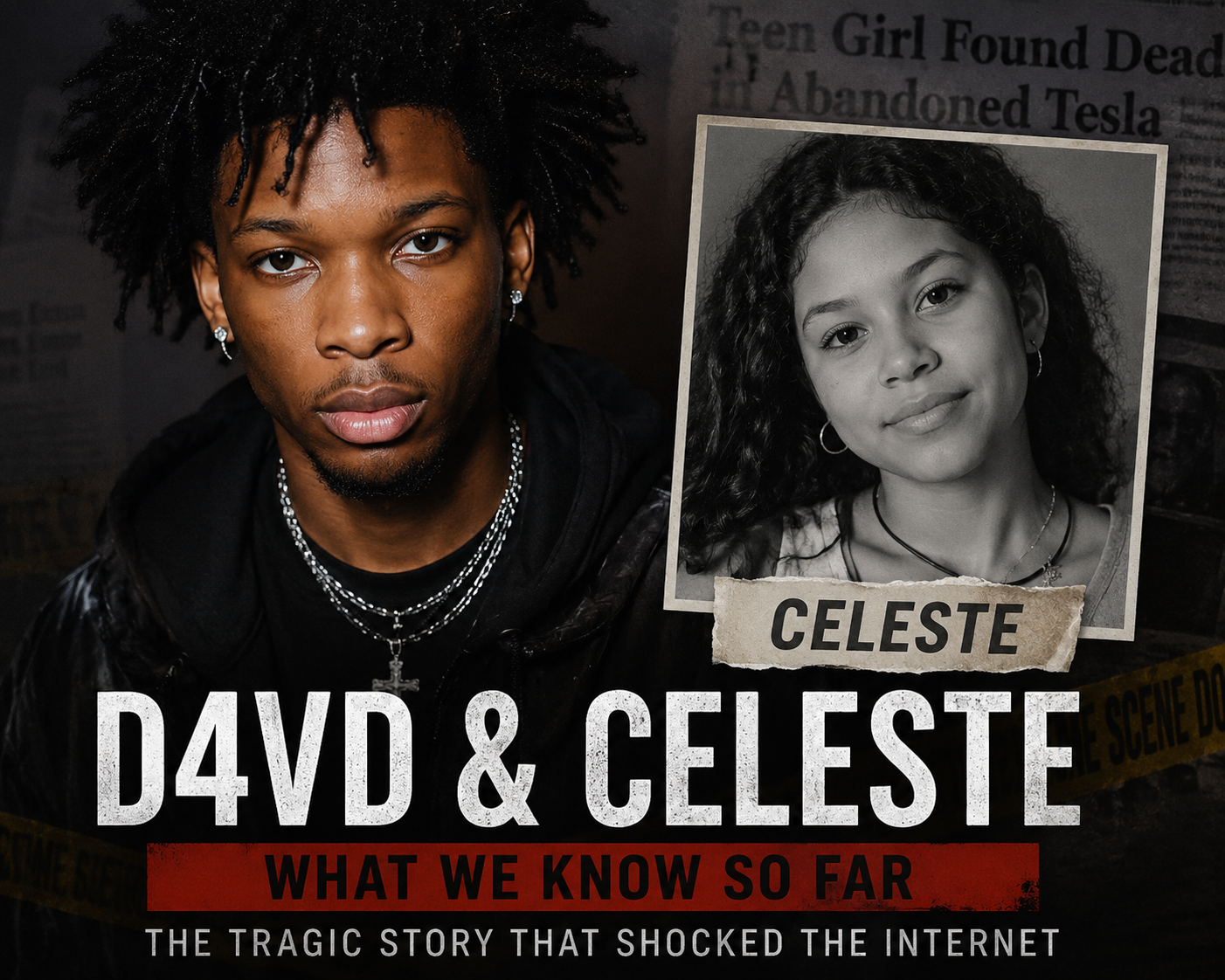
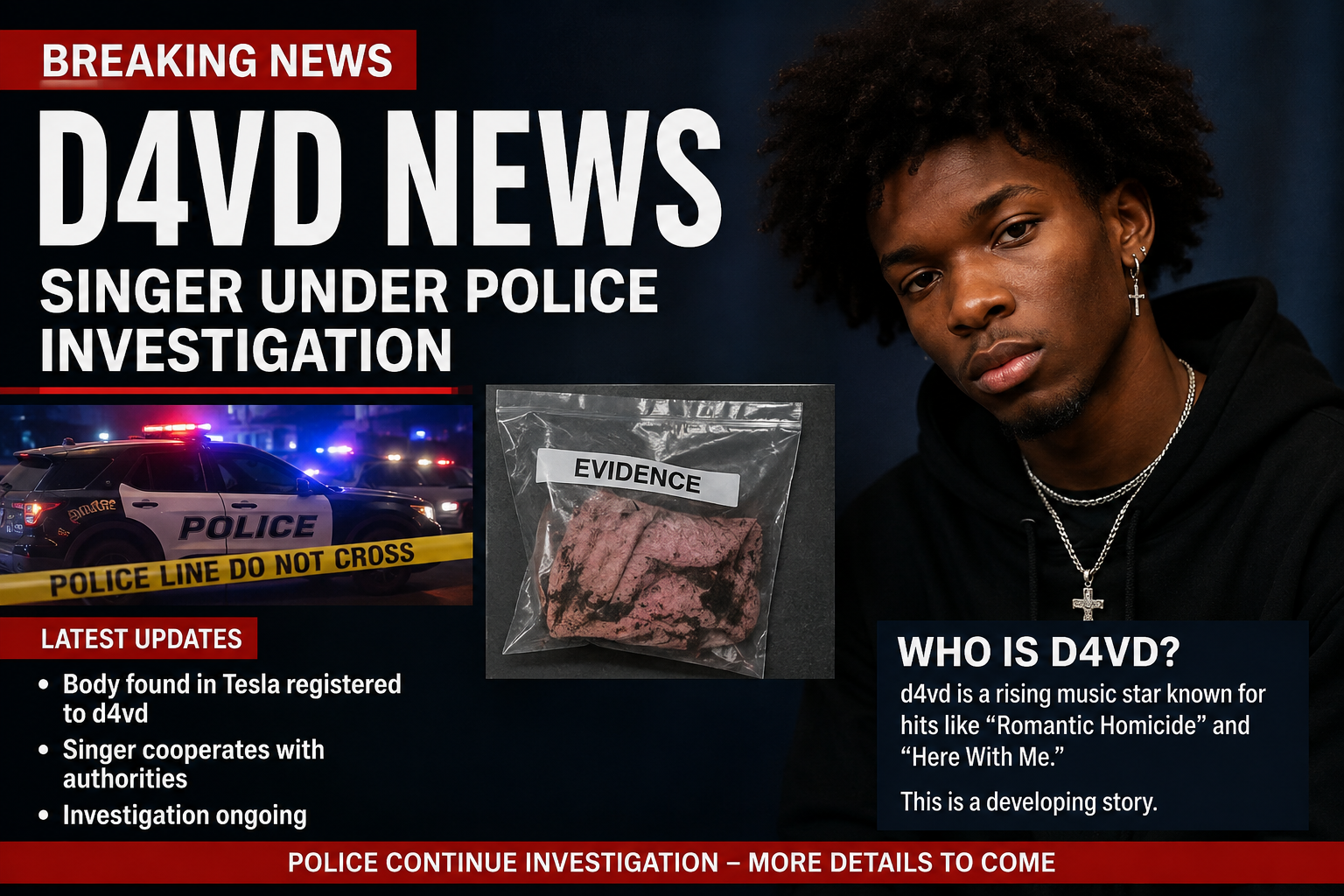
The d4vd case has captivated the public and legal observers alike, transforming a rising music career into a high-profile criminal prosecution. David Anthony Burke, the 21-year-old singer known professionally as d4vd, now faces the possibility of life in prison or even the death penalty. The allegations are as shocking as they are disturbing, involving the murder, sexual abuse, and dismemberment of a 14-year-old girl. This article serves as a definitive resource on the d4vd case, breaking down the charges, the evidence, the legal strategies, and what comes next.
The Rise of d4vd Before the Case
Before the world knew him as a defendant in a murder trial, d4vd was a burgeoning Gen Z pop sensation. Born David Anthony Burke in Queens, New York, in 2005, he first gained attention not through traditional music channels, but through the gaming world. He created montages of himself playing Fortnite set to his own music, a strategy that quickly built a dedicated online following. This organic, digital-first approach to fame led to the viral success of his 2022 singles “Romantic Homicide” and “Here with Me,” which propelled him onto the Billboard Hot 100 and secured him a record deal with Darkroom and Interscope Records. His moody, bedroom-style indie pop and R&B resonated with millions, and he was on the cusp of a world tour. Yet, just as his career was peaking, a dark secret would emerge, completely halting his trajectory and leading to the d4vd case that now dominates headlines.
The Discovery That Sparked the Investigation
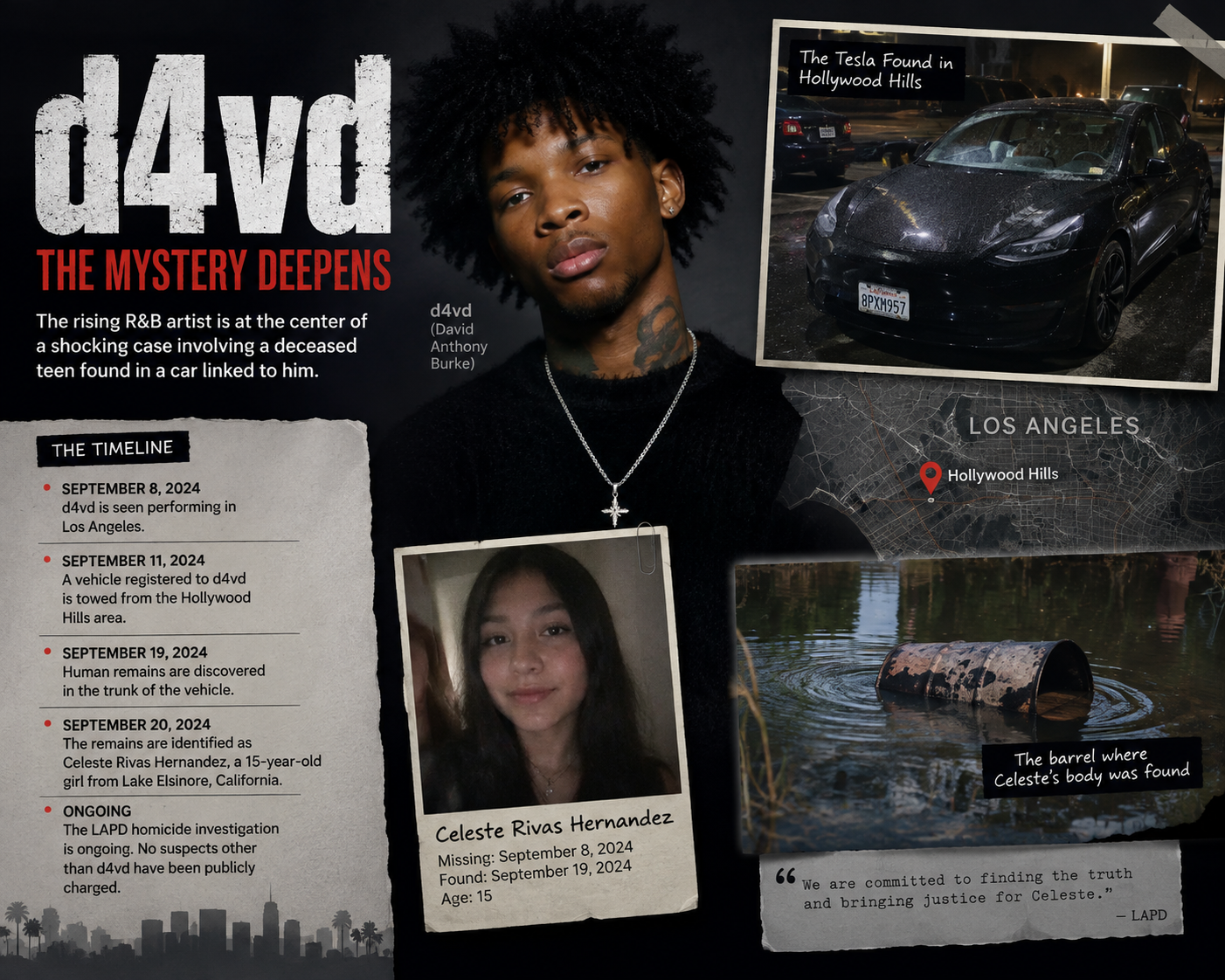
The d4vd case began not in a courtroom, but in a Hollywood tow yard on September 8, 2025. Police responded to a report of a foul odor emanating from a Tesla Model X that had been impounded. When officers opened the front trunk, they made a gruesome discovery: the decomposing, dismembered remains of a teenage girl. The body was later identified through dental records as 14-year-old Celeste Rivas Hernandez, who had been reported missing from Lake Elsinore, California. The vehicle was registered to d4vd, immediately making him a person of interest. The scene was so horrific that the responding detective described finding the torso and head in one body bag and severed limbs in another. This grim discovery set the stage for a months-long investigation that would eventually lead to the d4vd case formally moving forward with criminal charges.
The Formal Charges in the D4vd Case
On April 16, 2026, d4vd was arrested, and the d4vd case officially entered its most critical phase. He was formally charged with a series of devastating felony counts. The primary charge is first-degree murder with special circumstances, which carries the most severe penalties. Additionally, he faces charges of continuous sexual abuse of a child under 14 years old and the unlawful mutilation of human remains. The “special circumstances” allegation is crucial because it makes the defendant eligible for the death penalty. Prosecutors allege that the killing was carried out to prevent the victim from reporting the sexual abuse, a factor that elevates the severity of the crime in the eyes of the law. Throughout the proceedings, Burke has pleaded not guilty to all charges, and his defense team has vigorously maintained his innocence.
Prosecutors’ Allegations and Timeline of Events
To understand the d4vd case, one must grasp the prosecution’s narrative of the events. They allege that Burke and Rivas Hernandez began a sexual relationship in 2023, when he was 18 and she was just 13. The relationship allegedly continued for over a year, with the victim threatening to expose the illegal conduct and ruin Burke’s burgeoning music career. Prosecutors claim that on April 23, 2025, Burke used an Uber to bring the teen to his Hollywood Hills home—the last time she was seen alive. The criminal complaint alleges that Burke stabbed her multiple times and watched her bleed out. In a chilling attempt to distance himself from the crime, he is accused of ordering two chainsaws on Amazon to dismember her body. The d4vd case timeline reveals that the body remained in his Tesla for months before it was towed and discovered, with investigators confirming Burke was the last person to drive the vehicle.
The Preliminary Hearing and Key Evidence
The d4vd case reached a pivotal moment with the start of a multi-day preliminary hearing in July 2026. This hearing is designed for a judge to determine if there is enough probable cause to send the case to trial. Prosecutors have called over ten witnesses, including police detectives and coroner officials, to present graphic testimony and evidence. Among the most damning pieces of evidence is the alleged discovery of a “significant amount” of child pornography on Burke’s iPhone. Furthermore, prosecutors have presented text messages from Burke’s iCloud that allegedly detail the pair’s discussions about sex, pregnancy, and abortion. The defense has argued that Burke was cooperative with police and has maintained that the actual evidence will prove he did not cause the victim’s death. The sheer volume of digital evidence, including up to 40 terabytes of data from wiretaps and forensic reports, makes this one of the most complex d4vd case proceedings in recent memory.
The Defense Strategy
In the face of overwhelming allegations, the defense team for David Burke has been methodical. Spearheaded by lead attorney Blair Berk, the strategy has been to challenge the prosecution’s narrative at every turn. They have successfully requested delays to review the massive amount of discovery, a tactic legal experts note is common in high-stakes cases. The defense has also focused on highlighting Burke’s cooperation with law enforcement during initial welfare checks. Their core argument remains that “the actual evidence will show David Burke did not murder Celeste Rivas Hernandez and he was not the cause of her death”. As the d4vd case progresses, they are likely to scrutinize the forensic evidence and challenge the reliability of the digital data, particularly given the advanced decomposition of the victim’s body, which complicated the autopsy.
The Role of Digital Evidence
The d4vd case is a stark example of how modern criminal investigations are increasingly reliant on digital forensics. The prosecution has amassed a staggering amount of digital evidence, including data from iCloud, text messages, and social media interactions. The presence of child sexual abuse material on Burke’s phone has added another layer of severity to the charges. This type of evidence requires specific legal protocols for collection and is subject to intense scrutiny. The defense’s request for delays in the d4vd case has been largely attributed to the need to process this 40-terabyte trove of information. This aspect of the case underscores a growing trend in the justice system where digital footprints can be as incriminating as physical evidence.
Comparison of Key Case Elements
| Aspect | Prosecution Argument | Defense Argument |
|---|---|---|
| Nature of Relationship | An illegal sexual relationship began when the victim was 13 and Burke was 18. | Burke claimed the victim told him she was 18, and he barely knew her. |
| Cause of Death | The victim died from multiple penetrating injuries, allegedly inflicted by Burke. | The defense maintains Burke was not the cause of her death. |
| Motive | The victim was killed to prevent her from exposing the relationship and ruining his career. | The defense has not publicly stated a specific alternative motive but denies the allegations entirely. |
| Key Evidence | Digital evidence (texts, child porn), security footage, DNA, and the Amazon chainsaw order. | Defense argues the evidence is circumstantial and that Burke cooperated with police. |
| Legal Outcome Sought | First-degree murder conviction with special circumstances, potentially leading to the death penalty. | Acquittal on all counts; arguing that the evidence will show innocence. |
Potential Penalties and the Death Penalty Question
Given the gravity of the charges in the d4vd case, the potential penalties are severe. If convicted of first-degree murder with special circumstances, Burke faces a maximum sentence of the death penalty or life in prison without the possibility of parole. California law allows for capital punishment, though the state has not carried out an execution since 2006. Los Angeles County District Attorney Nathan Hochman has stated that a decision on whether to seek the death penalty will be made after a thorough review of aggravating and mitigating factors. This decision will be one of the most consequential moments in the d4vd case, as it will determine the ultimate stakes of the trial for the defendant.
Impact on the Music Industry and Fanbase
The d4vd case has sent shockwaves through the music industry and Burke’s fanbase. Following the discovery of the body, Interscope Records dropped the artist and halted all promotional activities. A new song that briefly appeared on his Spotify page was removed within hours. The case has also sparked broader conversations about the power dynamics between adult artists and young fans, as well as the responsibilities of record labels in vetting their talent. For many fans, the d4vd case represents a profound betrayal, transforming the artist behind vulnerable, emotional songs like “Romantic Homicide” into a figure of a real-life tragedy. It serves as a cautionary tale about the dark side of fame and the consequences of unchecked behavior.
42 Dugg Net Worth 2026: How the Detroit Rapper Built His $2 Million Fortune
What to Expect Next in the D4vd Case
As the d4vd case continues, all eyes are on the Los Angeles courtroom. The preliminary hearing is expected to last several days, after which Judge Charlaine Olmedo will decide if there is sufficient evidence for a trial. Legal experts suggest that the prosecution’s case is strong enough to clear this evidentiary hurdle. If the case proceeds to trial, it could take months or even years to reach a conclusion, given the complexity of the evidence and the severity of the charges. The defense will likely continue to push for delays to build their strategy, while the prosecution will aim to maintain momentum. The outcome of this preliminary hearing will set the stage for what promises to be one of the most closely watched celebrity trials of the decade.
FAQs
What is the d4vd case about?
The d4vd case is a criminal prosecution against singer David Anthony Burke, known professionally as d4vd. He is accused of the first-degree murder, sexual abuse, and dismemberment of 14-year-old Celeste Rivas Hernandez, whose body was found in his impounded Tesla in September 2025.
Who is d4vd and what are his real name and age?
D4vd is the stage name of David Anthony Burke. He is a 21-year-old American singer and songwriter who rose to fame in 2022 with viral hits like “Romantic Homicide”. He is currently the defendant in the d4vd case.
What evidence is being presented in the d4vd case?
Prosecutors are presenting a wide range of evidence, including graphic testimony from detectives, DNA evidence, text messages from iCloud, security footage, and a significant amount of child pornography allegedly found on Burke’s phone. They also allege he ordered chainsaws online to dismember the victim’s body.
Has d4vd pleaded guilty in the case?
No, d4vd has pleaded not guilty to all charges in the d4vd case, including first-degree murder with special circumstances, continuous sexual abuse of a child, and mutilation of human remains
What is the maximum sentence d4vd could face if convicted?
If convicted in the d4vd case, Burke faces the possibility of the death penalty or life in prison without the possibility of parole, due to the special circumstances allegations attached to the murder charge.
Conclusion
The d4vd case is a harrowing saga that has unfolded from the heights of viral fame to the depths of a murder investigation. While the evidence presented so far paints a damning picture—from the discovery of a dismembered body in a Tesla to the alleged child sexual abuse material on the defendant’s phone—the legal process is just beginning. The presumption of innocence remains a cornerstone of the justice system, and d4vd’s defense team is prepared to fight every step of the way. Whether this case ends in a plea deal, a trial verdict, or an appeal, it will leave a lasting impact on the music industry and the public’s perception of internet-era fame. As more evidence comes to light, the full truth behind the d4vd case will slowly emerge, ensuring this story remains in the headlines for the foreseeable future.