












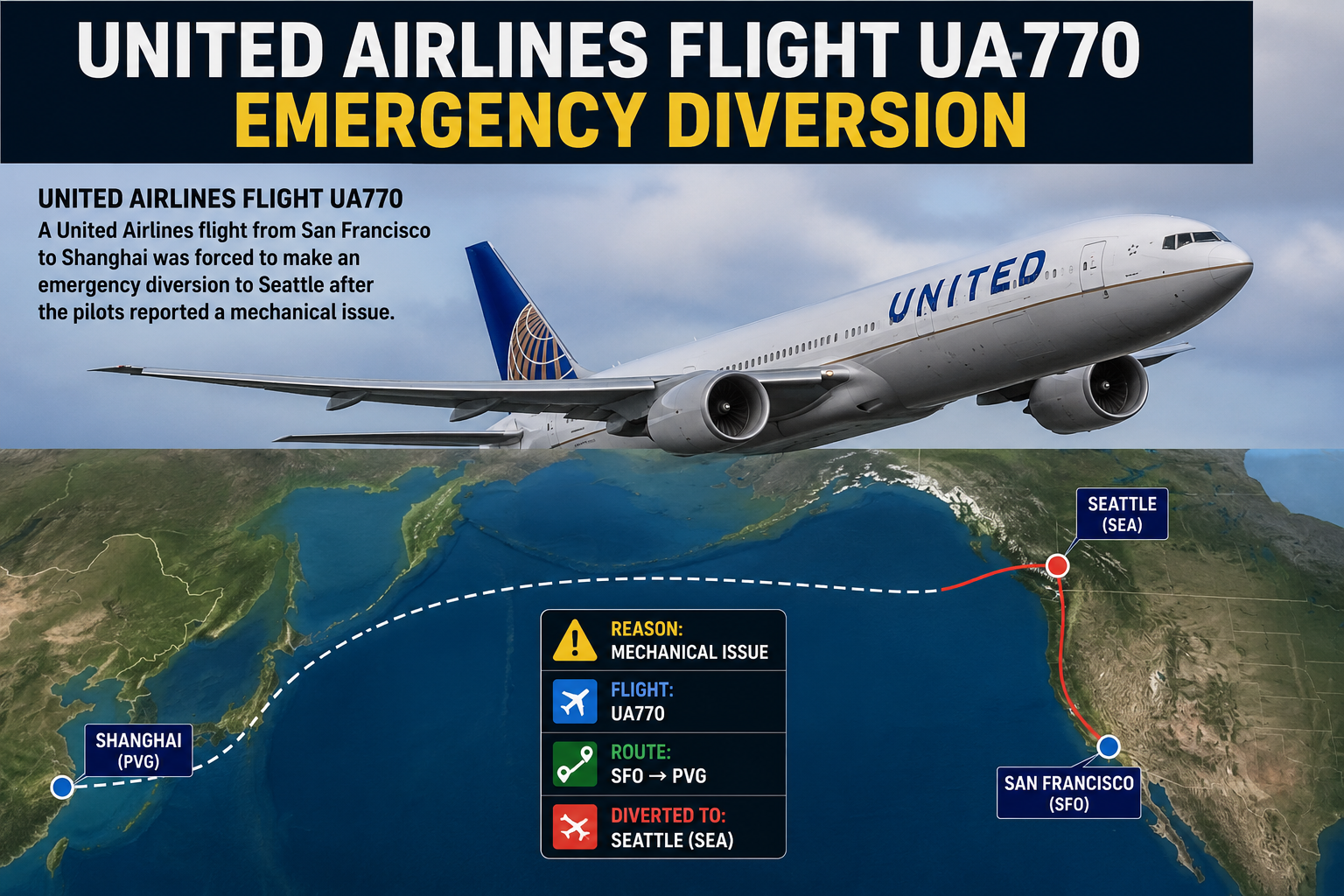
United Airlines Flight UA770 Emergency Diversion: What Really Happened Over the Atlantic
United Airlines Flight UA770 Emergency Diversion: A Deep Dive into What Happened and Why It Matters
On a routine summer afternoon in 2025, passengers aboard United Airlines Flight UA770 settled into their seats for what should have been a standard transatlantic crossing from Barcelona to Chicago. Instead, they became part of an event that would later be studied as a textbook example of aviation safety in action. The United Airlines Flight UA770 emergency diversion unfolded at 37,000 feet over the Atlantic, transforming an ordinary journey into a compelling demonstration of why commercial flying remains among the safest forms of transportation on the planet. This article explores every facet of that diversion—from the technical trigger to the human response—and what it tells us about the invisible layers of protection that keep air travel secure.
The Incident That Defined United Airlines Flight UA770 Emergency Diversion
The United Airlines Flight UA770 emergency diversion began approximately midway through the scheduled journey from Barcelona-El Prat Airport to Chicago O’Hare International Airport. The aircraft, a Boeing 787-9 Dreamliner carrying 257 passengers and 12 crew members, was cruising comfortably when the flight crew received an alert indicating a potential issue with the cabin pressurization system. Recognizing that even a suspected pressurization anomaly could escalate quickly at cruising altitude, the pilots made the decisive call to declare an emergency and initiate a diversion to the nearest suitable major airport—London Heathrow.
What makes the United Airlines Flight UA770 emergency diversion particularly noteworthy is the speed and precision with which the crew acted. Within minutes of detecting the irregularity, the pilots had consulted their checklists, communicated with air traffic control, and begun the controlled descent toward Heathrow. The aircraft touched down safely on Runway 27R at approximately 4:55 PM BST, with emergency vehicles standing by as a precaution. No injuries were reported, and passengers were quickly transported to the terminal by bus while security teams conducted a thorough sweep of the aircraft.
What Triggered the Diversion of United Airlines Flight UA770
The primary catalyst behind the United Airlines Flight UA770 emergency diversion appears to have been a suspected cabin pressurization anomaly. Cabin pressurization systems are essential for maintaining breathable air at cruising altitudes, where the outside atmosphere is too thin to support human life. When sensors flagged an irregularity—possibly related to a valve malfunction or a software glitch—the crew had no choice but to treat the situation with the utmost seriousness.
It is important to understand that the alert may have been a false indication rather than an actual system failure. Modern aircraft like the Boeing 787 are equipped with advanced health-monitoring systems that continuously assess thousands of parameters in real time. These systems are designed to detect anomalies early, sometimes before they manifest as noticeable problems. In the case of the United Airlines Flight UA770 emergency diversion, the crew’s conservative decision to divert rather than continue reflected the aviation industry’s fundamental safety philosophy: when in doubt, land the aircraft. This proactive approach is precisely why commercial aviation maintains such an extraordinary safety record.
How the Crew Handled the United Airlines Flight UA770 Emergency Diversion
The response to the United Airlines Flight UA770 emergency diversion showcased the rigorous training that commercial pilots undergo for precisely such scenarios. After receiving the pressurization alert, the pilots immediately declared a general emergency using the international distress code “Squawk 7700,” which alerted air traffic control and prioritized the flight for immediate handling. This universal transponder signal communicates a general emergency to all nearby aircraft and ground services, ensuring that the affected flight receives clear airspace and priority assistance.
Beyond the technical response, the human element proved equally crucial. The cabin crew maintained clear, calm communication with passengers throughout the United Airlines Flight UA770 emergency diversion, providing updates and reassurance without causing panic. Passengers later reported that the professionalism of the flight attendants made a significant difference in keeping the atmosphere composed during the descent and landing. One passenger recalled, “We felt a vibration, then announcements came fast”—but confusion quickly turned to reassurance as the crew explained the plan. This seamless coordination between flight deck and cabin is no accident; it is the product of countless hours of simulation training designed to prepare crews for exactly the kind of unexpected event that the United Airlines Flight UA770 emergency diversion represented.
The Passenger Experience During the Emergency Diversion
For those onboard, the United Airlines Flight UA770 emergency diversion was undoubtedly an unsettling experience. Travelers who had anticipated a routine flight found themselves facing an unexpected change of course and an unscheduled landing in a different country. Yet by all accounts, the atmosphere remained remarkably calm. The crew’s clear communication and steady demeanor helped prevent the kind of panic that might have complicated an already challenging situation.
Upon landing at Heathrow, United Airlines’ ground staff moved quickly to assist passengers with rebooking, accommodations, and meal vouchers. Most travelers were rebooked on alternative flights to Chicago the following day. While the disruption was certainly inconvenient, the airline’s swift response demonstrated its commitment to passenger welfare even amid an operational emergency. The United Airlines Flight UA770 emergency diversion serves as a reminder that while diversions are disruptive, they are also evidence of an industry that prioritizes safety over schedule—a trade-off that most travelers would readily accept when the alternative involves even a marginal increase in risk.
Why Heathrow Was Chosen as the Diversion Airport
The selection of London Heathrow as the diversion point for United Airlines Flight UA770 was far from arbitrary. Several strategic factors influenced this decision, making Heathrow the optimal choice given the circumstances. First, proximity mattered—Heathrow is one of the nearest major international airports equipped to handle a wide-body aircraft like the Boeing 787-9. Second, Heathrow possesses extensive emergency response capabilities, including dedicated fire and rescue services, fully equipped medical facilities, and comprehensive technical support.
Additionally, United Airlines maintains established ground operations at Heathrow, which facilitated efficient passenger management and aircraft servicing after the United Airlines Flight UA770 emergency diversion. The airport’s advanced Instrument Landing System (ILS) also enabled a seamless approach and landing, even under the pressure of an emergency situation. Coordinating the diversion required navigating through Spanish, French, and UK airspace, with EUROCONTROL playing a crucial role in ensuring safe passage. Heathrow’s combination of infrastructure, expertise, and United’s on-the-ground presence made it the clear choice when the pilots needed to get the aircraft on the ground quickly and safely.
The Role of Technology in the United Airlines Flight UA770 Emergency Diversion
Modern aviation technology played an indispensable role in the successful outcome of the United Airlines Flight UA770 emergency diversion. The Boeing 787-9 Dreamliner is equipped with real-time aircraft health monitoring systems that continuously transmit vital information about the aircraft’s systems to the airline’s operations center. When the pressurization alert triggered, this data allowed United’s ground teams to coordinate with air traffic control and begin planning the diversion even before the pilots had fully assessed the situation.
Advanced navigation tools, including satellite-based positioning and the Instrument Landing System at Heathrow, ensured that the aircraft could be guided safely to the runway even in potentially challenging conditions. The transponder code 7700—the same code used by the crew during the United Airlines Flight UA770 emergency diversion—is a universally recognized signal that instantly communicates the nature of the emergency to all relevant parties. This integration of onboard systems, ground infrastructure, and air traffic management creates a safety net that makes modern commercial aviation extraordinarily resilient to the unexpected.
What the Diversion Reveals About Aviation Safety Culture
Perhaps the most significant takeaway from the United Airlines Flight UA770 emergency diversion is what it reveals about the safety culture that underpins commercial aviation. In few other industries is the precautionary principle applied so consistently and so rigorously. When the crew of UA770 received a pressurization alert—even one that may have been a false indication—they did not hesitate to declare an emergency and divert the aircraft. This reflects a deeply ingrained philosophy that safety considerations always outweigh operational or commercial pressures.
The aviation industry’s safety culture is built on layers of redundancy, rigorous training, and a commitment to learning from every incident. Airlines like United invest heavily in crew training, ensuring that pilots and flight attendants are prepared to handle a wide range of in-flight emergencies. Flight crews undergo regular simulations and training exercises that replicate scenarios like the United Airlines Flight UA770 emergency diversion, making them well-prepared to manage such situations under pressure. This commitment to preparedness, combined with advanced technology and conservative decision-making, is why flying remains one of the safest activities a person can undertake.
Comparison of Emergency Diversion Types
| Type of Diversion | Primary Trigger | Typical Response | Passenger Impact | Common Examples |
|---|---|---|---|---|
| Technical/Mechanical | System alerts, equipment malfunction, pressurization issues | Immediate declaration of emergency; diversion to nearest suitable airport | Disruption to travel plans; minimal safety risk due to early intervention | United Airlines Flight UA770 emergency diversion (pressurization alert) |
| Medical | Passenger or crew member requires urgent care | Diversion to airport with adequate medical facilities; medical teams on standby | Delay; passenger may be offloaded for treatment | In-flight heart attack, severe allergic reaction, injury |
| Weather-Related | Severe turbulence, storms, volcanic ash, extreme winds | Rerouting around weather systems; diversion to alternate airport | Extended flight time; possible overnight stay | Atlantic storms, typhoons, ash clouds from volcanic eruptions |
| Security-Related | Bomb threat, suspicious behavior, security breach | Immediate diversion to secure airport; law enforcement involvement | Extended delays; passenger interviews and security screening | Threatening notes, unruly passengers, potential explosives |
Common Misconceptions About In-Flight Emergencies
One of the most persistent misconceptions about events like the United Airlines Flight UA770 emergency diversion is that an “emergency” declaration means the aircraft is in immediate danger of crashing. In reality, the word “emergency” in aviation often signals that the crew has chosen the safest option early, rather than taking any risk at all. The United Airlines Flight UA770 emergency diversion is a perfect example of this principle: the crew acted on a precautionary basis, not because the aircraft was uncontrollable or in imminent peril.
Another common misunderstanding involves the use of oxygen masks during pressurization events. In many retellings of the United Airlines Flight UA770 emergency diversion, accounts have differed on whether masks were deployed. The available reports indicate that oxygen masks were not deployed during this particular incident, suggesting that the situation remained well within the crew’s control. This distinction matters because it reinforces that the diversion was a precautionary measure rather than a response to an acute decompression event. Understanding these nuances helps travelers interpret such incidents accurately and maintain confidence in the safety of air travel.
Lessons for Travelers from the United Airlines Flight UA770 Emergency Diversion
For frequent flyers and occasional travelers alike, the United Airlines Flight UA770 emergency diversion offers several practical lessons. The most important is the value of following crew instructions without hesitation during unexpected events. Flight attendants and pilots are trained to manage emergencies with precision, and passenger cooperation is essential to maintaining order and safety. When the crew of UA770 communicated their plan, passengers listened—and that cooperation contributed to the calm atmosphere that characterized the diversion.
Travelers should also recognize that disruptions, while inconvenient, are often evidence that safety systems are working exactly as designed. The United Airlines Flight UA770 emergency diversion delayed passengers’ arrival in Chicago, but it also ensured that everyone arrived safely. For those who fly regularly, carrying essential medications, keeping travel documents accessible, and having a basic understanding of airline passenger rights can make unexpected diversions far less stressful. Airlines like United typically provide accommodations, meal vouchers, and rebooking assistance during such events—as they did following the United Airlines Flight UA770 emergency diversion—so passengers should not hesitate to seek that support.
Best AI Image to Video Tools 2026: Top 10 Generators for Cinematic Quality
The Aftermath: How United Airlines Responded
In the hours following the United Airlines Flight UA770 emergency diversion, United Airlines demonstrated the kind of operational responsiveness that travelers expect from a major carrier. Ground staff met the aircraft upon arrival at Heathrow, assisting passengers with disembarkation and guiding them through the rebooking process. Hotel accommodations and meal vouchers were provided to those who needed overnight stays, and alternative flights were arranged to get travelers to Chicago as quickly as possible.
The airline also coordinated with aviation authorities to ensure that the aircraft received a thorough inspection before being cleared for its next flight. While the exact cause of the pressurization alert remained under investigation, United’s priority was clear: get passengers to their destination safely, and ensure that any underlying issues were fully understood and addressed. This dual focus on passenger care and operational integrity is characteristic of how major airlines handle events like the United Airlines Flight UA770 emergency diversion, reinforcing the industry’s commitment to safety and service.
Why Emergency Diversions Are More Common—and Safer—Than You Think
Many travelers are surprised to learn that emergency diversions occur with some regularity in commercial aviation, yet the vast majority of these events conclude without incident. The United Airlines Flight UA770 emergency diversion is not an anomaly; it is one of thousands of diversions that occur each year across the global aviation system. What makes these events notable is not their frequency but the professionalism with which they are managed.
The key to understanding why diversions are so safe lies in the aviation industry’s conservative approach to risk. When a pilot encounters an irregularity, the default response is to land the aircraft as soon as practicable—not to press on and hope for the best. This philosophy means that many diversions are triggered by issues that would never escalate into genuine emergencies if left unaddressed. The United Airlines Flight UA770 emergency diversion exemplifies this approach: the crew encountered a potential problem and chose the safest path, transforming what could have been a serious situation into a manageable inconvenience.
“The United Airlines Flight UA770 emergency diversion serves as a timely reminder of the crucial role safety plays in air travel. Airlines like United, with their commitment to safety, are continuously working to improve their systems and ensure a smooth experience for all passengers.”
FAQs
What caused the United Airlines Flight UA770 emergency diversion?
The United Airlines Flight UA770 emergency diversion was triggered by a suspected cabin pressurization anomaly detected by the aircraft’s onboard monitoring systems while the Boeing 787-9 was cruising over the Atlantic. The crew received an alert indicating a potential issue with the pressurization system and made the conservative decision to declare an emergency and divert to London Heathrow.
Were any passengers or crew injured during the United Airlines Flight UA770 emergency diversion?
No injuries were reported among the 257 passengers and 12 crew members aboard United Airlines Flight UA770. The aircraft landed safely at London Heathrow, and passengers were disembarked without complications.
Why did the United Airlines Flight UA770 emergency diversion go to London Heathrow instead of another airport?
London Heathrow was selected because it was the nearest major international airport capable of handling a Boeing 787-9, with extensive emergency response capabilities, full maintenance facilities, and established United Airlines ground operations. The airport’s advanced Instrument Landing System also facilitated a safe approach.
How did United Airlines assist passengers after the emergency diversion?
After the United Airlines Flight UA770 emergency diversion, United Airlines provided passengers with hotel accommodations, meal vouchers, and rebooking on alternative flights to Chicago. Ground staff met the aircraft at Heathrow to assist with the transition and ensure passengers were cared for.
Is the United Airlines Flight UA770 emergency diversion an indication that flying is unsafe?
On the contrary, the United Airlines Flight UA770 emergency diversion demonstrates why commercial aviation remains exceptionally safe. The crew acted on a precautionary basis rather than waiting for a problem to escalate. This conservative approach—landing the aircraft at the first sign of irregularity—is precisely what keeps air travel among the safest forms of transportation.
Conclusion
The United Airlines Flight UA770 emergency diversion of May 2025 stands as a compelling case study in modern aviation safety. From the moment the pressurization alert triggered to the safe touchdown at London Heathrow, every aspect of the event reflected the industry’s unwavering commitment to protecting passengers and crew. The crew’s decisive action, the seamless coordination with air traffic control, the advanced technology that enabled real-time monitoring, and the calm professionalism of the cabin staff all contributed to an outcome that was both safe and orderly.
For travelers, the United Airlines Flight UA770 emergency diversion offers reassurance rather than cause for concern. It demonstrates that when something unexpected occurs at 37,000 feet, there are layers of safety systems, highly trained professionals, and conservative decision-making protocols ready to respond. Disruptions like this one are inconvenient, but they are also evidence that the aviation industry takes no chances with safety. The next time you board a flight, you can take comfort in knowing that the pilots in the cockpit are prepared to handle exactly the kind of situation that unfolded on United Airlines Flight UA770—and that their first priority, always, is getting you to the ground safely.