











Drew Harrison: Career, Ghost of Yōtei, and the Controversy Explained
Drew Harrison: The Game Developer Behind the Ghost of Yōtei Controversy
Introduction
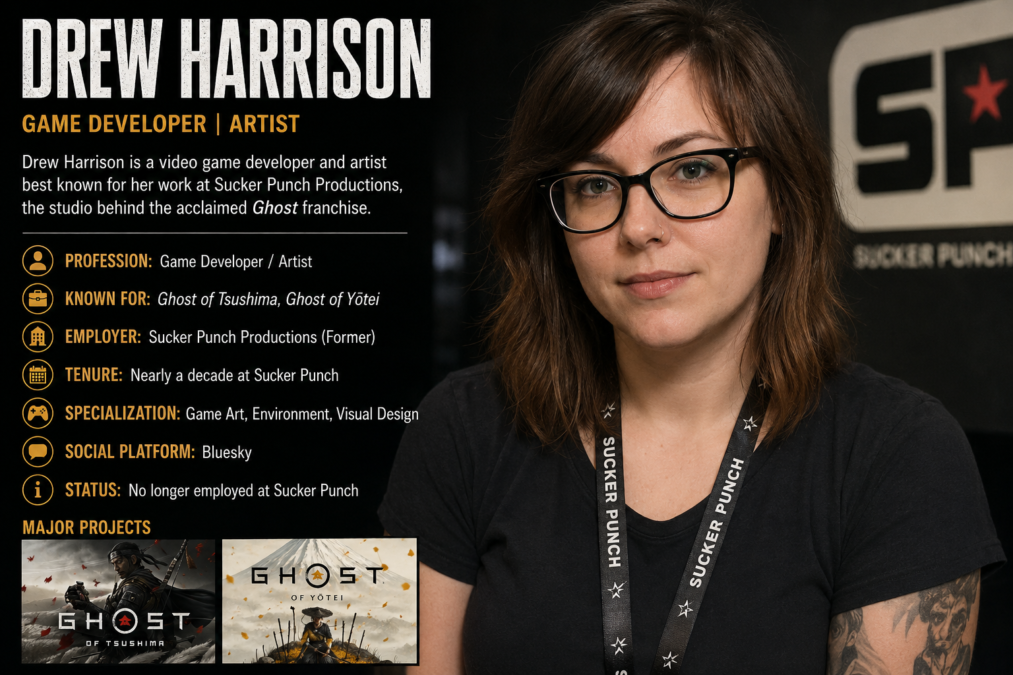
Drew Harrison is a video game developer and artist who gained widespread public attention due to her work at Sucker Punch Productions and the controversy that emerged around her social media activity in 2025. While many people first learned about Harrison through discussions related to Ghost of Yōtei, she had already built a respected career within the gaming industry long before becoming the focus of online debate.
Search interest surrounding terms such as “Drew Harrison Ghost of Yōtei,” “Drew Harrison Bluesky,” “Drew Harrison fired,” and “Drew Harrison game developer” increased dramatically as news outlets, gaming communities, and social media users discussed the events that ultimately led to her departure from Sucker Punch Productions. This article explores Drew Harrison’s background, career achievements, role in the Ghost franchise, and the controversy that brought her into the spotlight.
Quick Bio
| Field | Details |
|---|---|
| Full Name | Drew Harrison |
| Profession | Video Game Developer and Artist |
| Industry | Video Game Development |
| Known For | Work on Ghost of Tsushima and Ghost of Yōtei |
| Former Employer | Sucker Punch Productions |
| Parent Company | Sony Interactive Entertainment |
| Specialization | Game Art and Development |
| Public Recognition | Ghost of Yōtei controversy |
| Social Media Platform Discussed | Bluesky |
| Status | Former Sucker Punch Developer |
Early Career and Professional Background
Before becoming a trending topic online, Drew Harrison was primarily known within game development circles. She spent years working in the video game industry, contributing artistic and creative expertise to major projects.
Like many successful developers, Harrison’s work largely remained behind the scenes. Game artists and developers often play critical roles in shaping the visual identity, environments, and overall player experience of modern games, yet they rarely receive the same level of public recognition as directors or lead designers.
Over time, Harrison established herself as a respected member of the development community. Her experience and contributions eventually led her to become part of Sucker Punch Productions, one of Sony’s most successful first-party game studios.

Drew Harrison and Sucker Punch Productions
Sucker Punch Productions is known for creating critically acclaimed titles and has built a strong reputation for delivering high-quality gaming experiences. The studio became particularly famous for the Ghost franchise, which achieved global success following the release of Ghost of Tsushima.
Drew Harrison joined the studio and worked as part of the team responsible for developing projects within the Ghost series. Her role involved contributing artistic and creative expertise to some of Sony’s most anticipated releases.
Employees at major game studios often spend years helping create detailed worlds, characters, and visual assets. Harrison’s tenure at Sucker Punch reportedly lasted close to a decade, making her one of the more experienced members of the development team.
Contributions to Ghost of Tsushima
Ghost of Tsushima became one of the most successful PlayStation exclusives of its generation. Released to widespread critical acclaim, the game was praised for its visuals, open-world design, and immersive depiction of feudal Japan.
As a member of the Sucker Punch team, Drew Harrison contributed to the studio during a period of tremendous success. Although game development is always a collaborative effort involving hundreds of professionals, every artist and developer plays a role in bringing such ambitious projects to life.
The success of Ghost of Tsushima helped establish Sucker Punch as one of Sony’s premier studios and generated excitement for future installments in the franchise.
Drew Harrison and Ghost of Yōtei
Interest in Drew Harrison increased significantly due to her connection with Ghost of Yōtei, the successor to Ghost of Tsushima.
Ghost of Yōtei was among Sony’s most anticipated releases, attracting attention from fans around the world. As details about the game emerged, players became increasingly interested in the developers responsible for creating the experience.
However, discussions about the game soon became intertwined with broader conversations involving social media, online culture, and corporate responsibility. As a result, searches for terms such as “Ghost of Yōtei Drew Harrison” and “Drew Harrison Ghost of Yōtei” surged across search engines.
The Bluesky Controversy
One of the most frequently searched topics associated with Harrison is the phrase “Drew Harrison Bluesky.”
Bluesky is a social media platform that has gained popularity among developers, artists, journalists, and technology enthusiasts. In 2025, Harrison became involved in a controversy following a post she made on the platform.
The post referenced the death of political commentator Charlie Kirk and was widely criticized after screenshots began circulating online. What may have initially been intended as a joke quickly became the center of a rapidly growing controversy.
As the discussion spread beyond Bluesky, major gaming communities, political commentators, and social media users began debating the post and its implications.
What Did Drew Harrison Say About Charlie Kirk?
One of the most common search queries related to Harrison is “What did Drew Harrison say about Charlie Kirk?”
The controversy stemmed from a social media post that many critics interpreted as making light of a tragic event. Once screenshots began circulating across various online platforms, reactions intensified rapidly.
Supporters of disciplinary action argued that public figures and professionals should be held accountable for comments that appear insensitive or inappropriate. Others believed that the backlash became disproportionate and reflected broader issues surrounding online outrage and cancel culture.
The incident quickly moved beyond gaming circles and became part of larger discussions regarding free expression, professional conduct, and the consequences of social media activity.
Drew Harrison Fired from Sucker Punch
As public pressure increased, reports emerged that Drew Harrison was no longer employed by Sucker Punch Productions.
Searches for terms such as “Drew Harrison fired,” “Drew Harrison Sucker Punch fired,” and “Drew Harrison SuckerPunch” surged as people sought information about the situation.
The decision attracted widespread attention because Harrison had reportedly spent many years working at the studio. Losing a position at a major game development company represented a significant turning point in her professional career.
The situation also sparked debate about how companies should respond when employees become involved in public controversies. Some observers supported the studio’s decision, while others questioned whether alternative approaches could have been considered.
Sony’s Involvement
Because Sucker Punch Productions operates under Sony Interactive Entertainment, the controversy naturally drew Sony into the discussion.
Many online users searched for phrases such as “Drew Harrison Sony” and “Drew Harrison developer” as they attempted to understand the relationship between the studio’s decision and Sony’s broader corporate policies.
While Sony’s public comments on the matter remained limited, the story became one of the most discussed gaming-industry controversies of the year.
The incident demonstrated how employee actions on social media can quickly become international news when connected to major entertainment brands.
Drew Harrison’s Response
Following her departure from Sucker Punch, Harrison spoke publicly about the experience and offered her perspective on what occurred.
According to various interviews and reports, she acknowledged that the post was a mistake and expressed regret regarding the situation. At the same time, she argued that the response escalated due to extensive online harassment and coordinated criticism.
Harrison stated that she would have welcomed opportunities to clarify her position or apologize publicly. Her comments added another dimension to an already complex debate involving accountability, online behavior, and corporate decision-making.
Public Reactions and Industry Debate
The Drew Harrison controversy became a case study in the intersection of gaming, social media, and modern workplace culture.
Critics argued that professionals working for major companies must understand that public statements can have consequences. Others viewed the situation as an example of how online controversies can spiral rapidly beyond their original context.
Gaming forums, content creators, journalists, and commentators spent months discussing the issue. As a result, Harrison’s name became closely associated with broader conversations about freedom of expression, social media responsibility, and corporate image management.
Regardless of where individuals stood on the issue, the controversy highlighted the increasingly complex relationship between personal online activity and professional careers.
Is Drew Harrison a Comedian?
Another search phrase that appears frequently is “Drew Harrison comedian.”
Based on publicly available information, Drew Harrison is primarily known as a video game artist and developer rather than a professional comedian. The association with comedy appears to stem largely from discussions surrounding the controversial social media post rather than from an established career in entertainment or stand-up comedy.
Drew Harrison Obituary Searches
Some users also search for “Drew Harrison obituary.”
There is no widely reported information suggesting that the game developer Drew Harrison has passed away. These searches may relate to unrelated individuals who share the same name or may result from confusion generated by online discussions.
Curt Kochner: The Higher Education Leader Who Shaped Student Success
Conclusion
Drew Harrison’s story represents one of the most talked-about gaming-industry controversies in recent years. Known primarily for her work as a game developer and artist at Sucker Punch Productions, she contributed to projects associated with the successful Ghost franchise, including Ghost of Tsushima and Ghost of Yōtei.
However, public attention shifted dramatically following the Bluesky controversy involving comments about Charlie Kirk. The resulting backlash, her departure from Sucker Punch, and the debates that followed transformed Harrison from a relatively unknown developer into a widely discussed figure across gaming and social media platforms.
As discussions continue regarding professional accountability, online speech, and workplace consequences, Drew Harrison’s experience remains a significant example of how rapidly a single social media post can impact a modern career.
Readers interested in gaming industry news, developer profiles, and digital culture discussions can find more in-depth articles and trending stories on ModernByteMedia.